


If Video Becomes the Next E-Commerce Gateway, What Would the Ideal Experience of Buying a Dress Be Like?
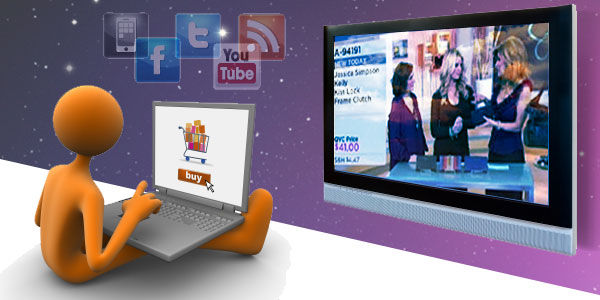
Introduction: Some are using TV dramas to tell stories for brands, others are developing 3D fitting rooms, and some are trying to enable purchases while watching shows. But shouldn't these three things be done together? Is it possible to integrate them seamlessly within a video to create a smooth experience?
From Taobao to Meilishuo and Mogujie, products (or ads) have gradually moved away from simple displays, increasingly incorporating styled scenes. However, this is only the first stage of shopping scene evolution. In the future, it's highly likely that shopping scenes will massively migrate into videos. The reason is simple: no matter how attractive a Taobao model is, they can't compare to the goddesses or long-legged oppas in Korean dramas wearing their outfits within the plot. Moreover, there's the "blind love" of fans.
Following this trend, the plaster-style pre-roll and post-roll ads will eventually be phased out. On one hand, the generation raised with products like Instagram and Pinterest (domestically, Nice and Tmall's client have similar features) represents the future mainstream consumers. They are accustomed to subtle ads, so video ads need to evolve as well. On the other hand, the explosive growth of video from PC to mobile has significantly devalued this crude ad format. Mobile video pre-rolls, which severely disrupt viewing experience, are even less viable.
So, my feeling is that "content is advertising" will become the mainstream for future videos. Moreover, regardless of how screens or platforms change (even potentially including immature platforms like Google Glass or Oculus), people's video consumption habits will only increase. This is why tech giants are scrambling to secure their video businesses: Alibaba just invested $1.2 billion in Youku Tudou, Suning invested in PPTV, Baidu has PPS and iQiyi, and Tencent is rumored to be involved with Sohu Video. Beyond these capital moves, various set-top boxes, routers with home data center capabilities, and the launch of 4G will all "fuel" people's video consumption. Mobile screens, TV screens, and PCs will collectively share the ad distribution role.
In fact, product placement (also known as native advertising) is nothing new, but current practices still don't align with the efficient, precise approach of the internet. Currently, a script is written, and then a bunch of suppliers compete to insert a specific product. I think the future shouldn't be like this. Social networks have accumulated vast amounts of data to help us determine, for example, what kind of people are the target audience for a show like "My Love from the Star," and then analyze what these people like. This way, players upstream in the content industry chain could directly negotiate with relevant suppliers. This would be more efficient and also help control content quality. Even soap operas should allow viewers to find some logical "true love." Combined with the star-making system, TV dramas can be a great scene for triggering "impulse" purchases—this is the most subtle way to tell a story for a product.
This solves the problem of discovering products within visible story scenes. Existing technology can fully meet users' purchasing needs. YouTube and many startups are already tagging products in videos to guide purchases, leveraging massive product and user purchase data to recommend "the same style as the goddess." Of course, the purchasing service must not harm the viewing experience, which can be achieved through interaction optimization.
For clothing, I think being able to buy is not enough. I also want to try on clothes while watching TV. Kinect and some startups have attempted such hardware, using image recognition and certain virtual reality technologies to perfectly fit clothes to the human body. If similar technology could turn an internet TV into a fitting mirror, it would bring the experience of trying on and buying clothes in a mall right into the home.
Of course, the content industry hasn't yet formed such a healthy mechanism. Meanwhile, technologies like virtual fitting mirrors are still immature (though this is no longer just a pipe dream). The habit of purchasing in this way is also not mainstream. However, if these three elements could be integrated, it would create a completely different shopping experience—a rather "indulgent" one!
Editor's Note: In future e-commerce websites, it will be inevitable for video to replace traditional images in providing product demonstrations to visitors. The real-time visual and three-dimensional feel of video is unmatched by traditional images. Video will undoubtedly be the next gateway for e-commerce. POLYV provides a powerful video platform for e-commerce. Additionally, tailored to the industry's characteristics, POLYV innovatively offers the "Five Treasures for E-commerce" powerful video features, which not only facilitate real-time interaction between visitors and merchants but also simplify the shopping process for visitors.
